


Project Makeover
4.549.32K Reviews
App Specs
- Version
- 2.146.1
- Updated On
- License
- Free
- Downloads
- 100,000,000+
- Developer
- Magic Tavern, Inc.
- Categories
- Casual
- Platform
- Android, iOS
Screenshots



 Analysis by AppCompare
I recently dove into the world of Project Makeover, and let me tell you, it was quite an experience! This game has been making waves in the mobile gaming community, so I thought it was high time to see what all the fuss was about. Spoiler alert: I wasn’t disappointed.
What the makeover loop changes
The most satisfying idea here is that a makeover is not just a picture to admire at the end. It is the visible reward for working through puzzles: a client arrives with a situation to address, I make progress by matching pieces, then spend what I earn on choices that change the client’s appearance or surroundings. That link gives the puzzle board a purpose beyond clearing another level. I’m not only chasing a high score; I’m working toward a specific transformation.
That structure also means the game suits short visits better than a long, uninterrupted design session. If I have a few spare minutes, I can try a puzzle and make a little progress. When I have more time, I can stay with the makeover decisions and see how the pieces of a client’s new look come together. The two activities offer different kinds of attention, which helps the game feel less monotonous than a makeover title built around choosing outfits alone.
Guides and Analysis on Project Makeover
I would not describe it as a free-form fashion studio. The fun comes from making choices within a guided sequence, rather than building any look or room from an unlimited blank canvas. That distinction matters if you mainly want open-ended decorating. For me, the direction is a strength: a client and a goal keep the decisions focused, so I am not left wondering what to do next.
First Impressions and Gameplay
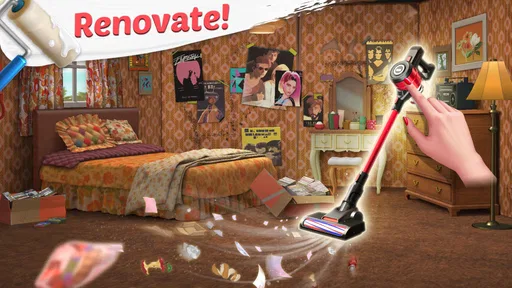
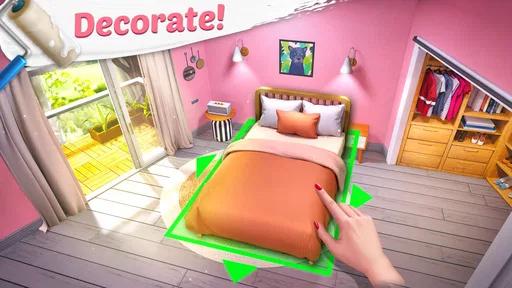
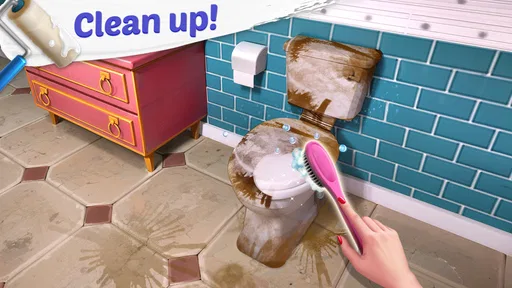
When I first launched Project Makeover, I was greeted with vibrant graphics and a catchy soundtrack that instantly got me in the mood for some makeover magic. The game’s premise is simple yet addictive. You’re tasked with transforming clients from head to toe, revamping their personal style, and even redesigning their living spaces. It’s a delightful mix of fashion, decor, and puzzle-solving.
The gameplay is divided into two main parts: makeovers and puzzles. You’ll need to complete match-3 puzzles to earn coins and gems, which are then used to purchase clothes, accessories, and furniture for your clients. It’s a clever way to keep you engaged and motivated to progress through the levels.
Design and Aesthetics
The design elements are where this game truly shines. The character models are well-designed, and the variety of outfits and decor items keep things fresh and exciting. The ability to choose different styles and color schemes allows for a personalized touch, making each makeover unique. The attention to detail is impressive, and it’s clear the developers have put a lot of thought into the aesthetics.
Worth Reading Before You Choose

Ludo King Makes the Most of the Minutes Between Plans

Baby Panda World Brings Quick Play to Modern Phones, but Its Game Library Feels Busy

ESPN’s Live Game View Makes Following Close Games Easier

QuizzLand Review: A Good Fit for Short Trivia Breaks, Not Every Player

Basketball Stars: Multiplayer Is Fast, but Can It Recover When Matches Go Wrong?

WEBTOON Turns Phone Updates Into a Better Reading Routine
Making choices without losing the client’s story
A practical way to enjoy the styling is to treat each client as a small design brief rather than trying to pick the option that looks most dramatic in isolation. I find it helps to notice what the makeover is meant to change: clothing, hair, makeup, or the room. That keeps the result feeling coherent. A bold outfit can be fun, but it may not be the choice I prefer if the rest of the look points in another direction.
There is a useful trade-off in the guided choices. They make decisions quick and approachable, so I do not need to know fashion terminology or interior design to take part. At the same time, they limit how much I can fine-tune a finished look. If I want precise control over every detail or the freedom to create a room from scratch, a dedicated design game is a better fit. Here, I enjoy the pace of choosing among options and seeing a client’s overall change.
For a player who likes to compare alternatives, I recommend pausing before tapping through a makeover. Look at the options as a set, not as isolated items: a hairstyle can change the impression of an outfit, and furnishings can affect the mood of a room. This small habit makes the final reveal more rewarding and helps me feel that I made a considered choice, even though the game keeps the process accessible.
Puzzles and Challenges
The puzzles themselves are pretty standard for a match-3 game, but they’re executed well. The difficulty ramps up gradually, which keeps things interesting without becoming frustrating. There are power-ups and boosters to help you out when you’re stuck, and using them strategically can make all the difference in progressing to the next level. Plus, the sense of accomplishment when you finally clear a tough puzzle is oh-so-satisfying.
A steadier way through difficult boards
When a level takes more than one attempt, I try to read the board before making quick matches. The useful move is not always the one that clears the most pieces immediately; it may be the move that opens space or brings a better match into reach. Keeping that in mind makes the puzzle side feel less like luck and more like a small planning exercise. I also avoid using a booster just because a board looks awkward at first. Saving help for a genuinely difficult moment can make it feel more valuable.
The main friction is that the puzzles are the gate between me and the next makeover step. If I am in the mood to style a client but do not want to spend time on a match-3 board, I cannot simply skip to the design part. Conversely, someone who wants a deep puzzle game may find that the boards mainly serve the makeover progression rather than offering a radically different puzzle format. The blend is the point, but it means each half depends on the other.
That makes this a better choice for people who enjoy switching activities than for someone who wants to play only one kind of game. I like being able to alternate between thinking about a match and making a visual choice. If I get attached to a particular client’s progress, a challenging board can feel like an interruption; if I enjoy the puzzle itself, it becomes a satisfying step toward the reveal.
Engaging Storylines
What sets this game apart from other makeover games is its engaging storylines. Each client has a backstory and specific needs, which adds a layer of depth and narrative to the gameplay. You’re not just dressing mannequins; you’re helping real (well, virtual-real) people regain their confidence and achieve their dreams. It’s a heartwarming touch that makes the game more immersive.
When it fits into an ordinary day
A realistic use for me is a brief break between tasks: I can open the game, attempt a board, and leave the larger transformation for another time. Later, if I have a longer pause, I can return to the client and consider the style and furnishing decisions with more care. That stop-and-start rhythm works well for casual play because each part gives me a clear next action. It is less suited to a commute or a quiet moment when I need to avoid interruption if I find myself determined to finish a difficult level before putting the phone away.
One small planning tip is to decide what I came to do before opening it. If I only have a minute, I focus on a quick puzzle attempt rather than starting a makeover sequence that I want to see through. If I want the visual payoff, I wait until I have enough time to make choices without rushing. Thinking this way does not change the game’s systems; it simply helps me enjoy the contrast between its quick puzzle turns and its more deliberate styling moments.
The client stories are also why I would choose this over a plain match-3 game when I want a sense of progression. A cleared board contributes to a person’s broader transformation, giving the reward a little emotional context. But if I want a story-led game where dialogue and narrative are the main attraction, this is not the same kind of experience. The makeover and puzzle loop stays at the center, with the client’s situation giving it a theme.
Community and Social Features
Another aspect I enjoyed is the social element. You can connect with friends, exchange gifts, and even compete in challenges. It adds a communal feel to the game and gives you the opportunity to show off your styling prowess. Plus, seeing other players’ creations can be a great source of inspiration.
Choosing it over similar casual games
Compared with a straightforward match-3 game, this one gives each completed level a visible purpose: progress feeds into clothing, beauty, and room changes rather than ending at the board. Compared with a pure makeover or decorating game, it asks me to solve puzzles as part of earning that progress. That combination is its clearest identity, and it is also the main reason someone might not click with it. Players looking for uninterrupted styling may prefer a design-focused alternative; players who want only increasingly demanding puzzle boards may prefer a puzzle-first game.
I would recommend it to someone who likes casual play with small goals and enjoys seeing a before-and-after result. It is especially appealing if picking between looks is as satisfying as clearing the board that unlocks the next step. I would be more cautious recommending it to a player who dislikes match-3 mechanics, who wants complete control over every design detail, or who becomes frustrated when progress in one activity depends on another. The game does not remove those preferences; it makes the mix its central trade-off.
Its broad reach is easy to understand: Magic Tavern, Inc. has made a casual game that pairs familiar puzzle play with a makeover theme, and it is free to start. It has a 4.5 average from around 1.2 million ratings and has passed 100 million installs, which signals that the basic combination has found a large audience. Those figures do not guarantee that its particular balance will suit everyone, but they do make sense for a game designed to be picked up in short sessions and followed through a series of transformations.
In-App Purchases
Like many free-to-play games, Project Makeover does offer in-app purchases. While they’re not necessary to enjoy the game, they can speed up your progress significantly. If you’re patient and strategic, you can progress without spending a dime, but it’s always tempting to splurge a little when you’re so close to completing that perfect makeover.
Purchases range from $0.99 to $99.99 per item, so I would treat the optional spending as a personal limit to decide on before a difficult stretch, rather than as a quick fix made in the heat of a level. The game is free, but that does not mean every player will experience the same pace: someone who is happy to retry boards can take a patient approach, while someone who wants progress faster may feel more tempted to spend. I would not buy anything just to avoid thinking through a puzzle; first I would take another look at the board and consider whether a different move could help.
For families, the Everyone age rating makes the game broadly approachable, but it is still worth having the usual conversation about optional purchases if a child will be playing. The visual makeover theme is easy to understand, and the puzzle loop is familiar, but accessible play and spending choices are separate issues. I would set expectations before handing over a device, particularly if payment settings are shared.
Who gets the most from it
The strongest match is a player who wants a little of several things at once: approachable match-3 boards, visible character makeovers, room decoration, and client stories that give the goals some context. It also works for someone who prefers guided choices over a blank design canvas and likes the feeling of finishing a sequence. Casual players who are content to make gradual progress can enjoy it without treating every session as a race.
I would suggest skipping it if the puzzle gate sounds like a chore, if you need to control every element of an outfit or room, or if spending pressure is a major concern for you. The same goes for players who want a game that remains entirely focused on one mechanic. In those cases, a conventional puzzle game or a dedicated decorating title is likely to be a more comfortable choice. Being clear about that before installing can prevent the mismatch that comes from expecting a pure fashion simulator.
On Android, the current version is 2.132.1 and the minimum operating system is Android 7.0. I would check that your device meets that requirement before downloading. The game is free, with optional purchases, and its Everyone content rating makes it an accessible casual option for a wide audience. If you are looking for a low-commitment blend rather than a demanding strategy game, that combination is part of its appeal.
Overall, Project Makeover is a fantastic blend of fashion, design, and puzzle-solving that will keep you entertained for hours. Whether you’re a fashionista, a puzzle enthusiast, or just looking for a fun way to pass the time, this game has something for everyone. So go ahead, give it a try, and unleash your inner stylist!
Pros
- Engaging customization options.
- Diverse character designs.
- Fun storyline progression.
- Regular updates and events.
- Easy-to-learn gameplay.
Cons
- Requires frequent in-app purchases.
- Energy system limits playtime.
- Ads can be intrusive.
- Levels become repetitive.
- Limited offline functionality.
FAQs for Project Makeover
What is the main objective of Project Makeover?
Project Makeover is a unique blend of puzzle-solving and fashion design, where players transform characters by giving them makeovers. The objective is to solve match-3 puzzles to earn resources, which are then used to upgrade the character’s appearance, home, and wardrobe. The game combines creativity and strategy, making it engaging for a wide audience.
Is Project Makeover free to play?
Yes, Project Makeover is free to download and play on both Android and iOS platforms. However, it offers in-app purchases for players who wish to enhance their gaming experience. These purchases can help speed up progress or provide access to exclusive items, but they are entirely optional and not necessary to enjoy the core gameplay.
What kind of puzzles are included in Project Makeover?
The game features match-3 puzzles, which require players to match three or more same-colored pieces to clear them from the board and achieve specific level objectives. As players progress, the puzzles become more challenging, requiring strategic thinking and careful planning to overcome obstacles and complete levels successfully.
Are there any social features in Project Makeover?
Yes, Project Makeover includes social features that allow players to connect with friends. Players can share their makeover achievements, compete on leaderboards, and even send and receive lives to help each other progress through the game. This social aspect adds a layer of community engagement and friendly competition.
How frequently is new content added to Project Makeover?
The developers of Project Makeover regularly update the game with new content, including additional levels, outfits, and challenges. These updates ensure that players have fresh experiences and new goals to achieve, keeping the gameplay dynamic and engaging. Players can expect consistent improvements and seasonal events to enhance their gaming experience.


